The short answer
Start with the error code on the display. Read the manual for what it means. Then check the simple things: the gas valve, the power, the inlet water filter and whether a faucet is open far enough to start the burner. If those are fine, scale on the heat exchanger or a vent problem is the next suspect.
Common symptoms
| Symptom | Likely cause | What to try |
|---|---|---|
| No hot water | Gas off, power off or flow too low | Check the gas valve, the power and open a tap fully |
| Hot, then cold, then hot | Low flow or scale | Clean the inlet screen and descale |
| Error code on the display | Varies by brand | Look up the code in the manual |
| Water too hot or too cool | Temperature setting or scale | Check the setting, then descale |
| Rumbling or kettle noise | Scale on the exchanger | Descale |
A code that returns after a reset is not a glitch. It is telling you about a real problem.
A basic descaling flush
Turn off the power and the gas and close the water valves.
Connect hoses from the service valves to a bucket and a small pump.
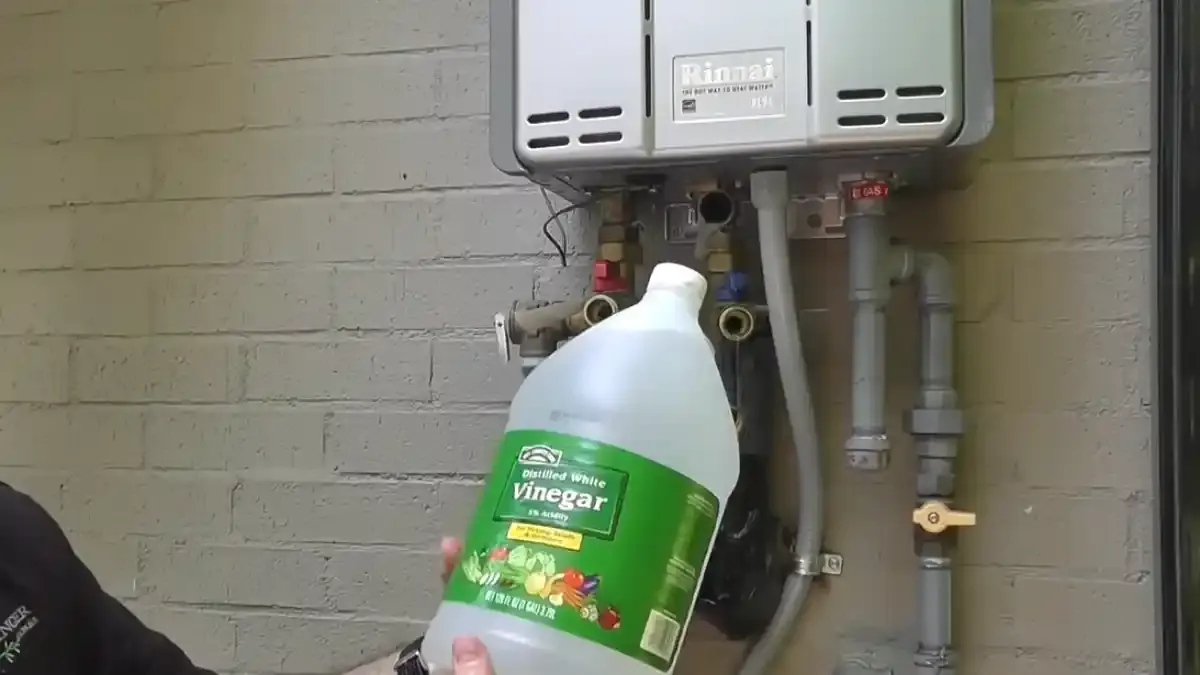
Pour white vinegar or an approved descaler into the bucket.
Circulate it through the unit for about an hour, then flush with clean water.
Clean the inlet filter, open the valves and restore power and gas.
If the valves are stuck, a service-valve kit makes the job easier. If you are not comfortable, our tankless service includes flushing.
When to stop and call
You smell gas or see soot.
The unit leaks from inside the case.
A vent or condensate line is blocked.
The error code returns after a descale.
You cannot get to the service valves or the filter.
Gas appliances need care. If you smell gas, leave the house and call the gas utility or 911 first.
Gas supply and vent as hidden causes
A tankless burner uses a lot of gas at once. A gas line that is too small, a regulator that drops pressure or a long run from the meter can cause ignition errors that look like a failed unit. A blocked vent or a clogged condensate drain triggers safety shutdowns.
A plumber can measure gas pressure under load and inspect the vent. When a failure turns out to be the unit itself, a replacement may be needed, and water heater installation covers that.
Quick checks before you call
Confirm a tap is open far enough to trigger the unit, since many need a minimum flow to fire.
Check that the gas valve and the water shutoffs are fully open.
Clean the cold water inlet screen if the unit has one.
Look for a blocked or iced vent termination outside.
Write down the exact error code and the model number before you call.
Having the code and the model ready saves time on the phone. Most makers publish a code table in the manual, and many codes point at a specific part.
Why the water goes cold between hot bursts
A tankless heater only runs while water flows. If you turn a tap on briefly, the unit starts, but the water already in the pipe is cold. If you run a tap at a very low flow, the unit may not fire at all. In a house with long pipe runs, the first water out is cold, and the unit's brief ramp-up creates a hot, then cold sandwich if you pause.
Fixes depend on the cause. A recirculation pump or a small buffer tank evens out the temperature. Cleaning the inlet screen restores flow. Descaling restores heat transfer. A plumber can tell which one you need after a short test.
Repair or replace
| Situation | Usual answer |
|---|---|
| Igniter, flame sensor or flow switch fails | Repair, the parts are replaceable |
| Scale build-up, no leaks | Descale and clean, then monitor |
| Heat exchanger leaks | Often replace the unit |
| Unit is old and parts are scarce | Weigh the repair against a new unit |
| Unit is undersized for the household | Consider a larger unit or a second one |
We give you the honest answer after we read the code and test the unit, and we tell you when a repair will not hold.
Maintenance that prevents most service calls
A tankless unit works hard to heat water quickly, and mineral scale builds on the heat exchanger over time. A descaling flush with a pump and a mild acid solution clears it. Many makers recommend a flush about once a year, and more often where scale builds quickly.
Clean the cold water inlet screen at the same visit, and check that the vent and the condensate drain are clear. A blocked drain can shut a condensing unit down just as surely as a failed part.
Keep the maker's manual and write the date of each flush on a label near the unit. That record also helps if a warranty question comes up later.
Keep a short log of the symptom, the error code and the date. A pattern such as a fault only in winter or only when two taps run together points to the cause faster than a single visit can. That note makes the call shorter and the repair more accurate for you.
Know your water before you set a schedule
Bridgewater's Water Division website lists annual water quality reports for 2022 through 2025, and says they describe the water sources, treatment and how the water compares to state and federal standards. Scale depends on your water, so ask the department for the current report, or test your tap.
Harder water means more frequent flushing. If you have never flushed the unit, do it before the next heating season.
Source type: municipal water quality reports pageWhere we service
We service tankless units in Bridgewater and in East Bridgewater and Middleborough. Tell us the brand, the model and the code.
Sources and standards for this guide
The maker's service manual is the standard for error codes and flush intervals. Gas and venting repairs fall under 248 CMR 5.00 and 248 CMR 10.00.
Questions readers ask
Many makers suggest yearly. Harder water or more use means more often. Check your manual.
Low flow, scale or a recirculation setup can cause it. We test flow and clean the unit.
Many makers allow white vinegar. Follow your manual and flush with clean water afterward.
On the Water Division page of the town's website, which lists annual reports for recent years.
Often yes. Igniters, sensors, flow switches and fans are replaceable. We check before we recommend replacement.
Still have a question? Call (508) 389-4045 and we will answer it.