The short answer
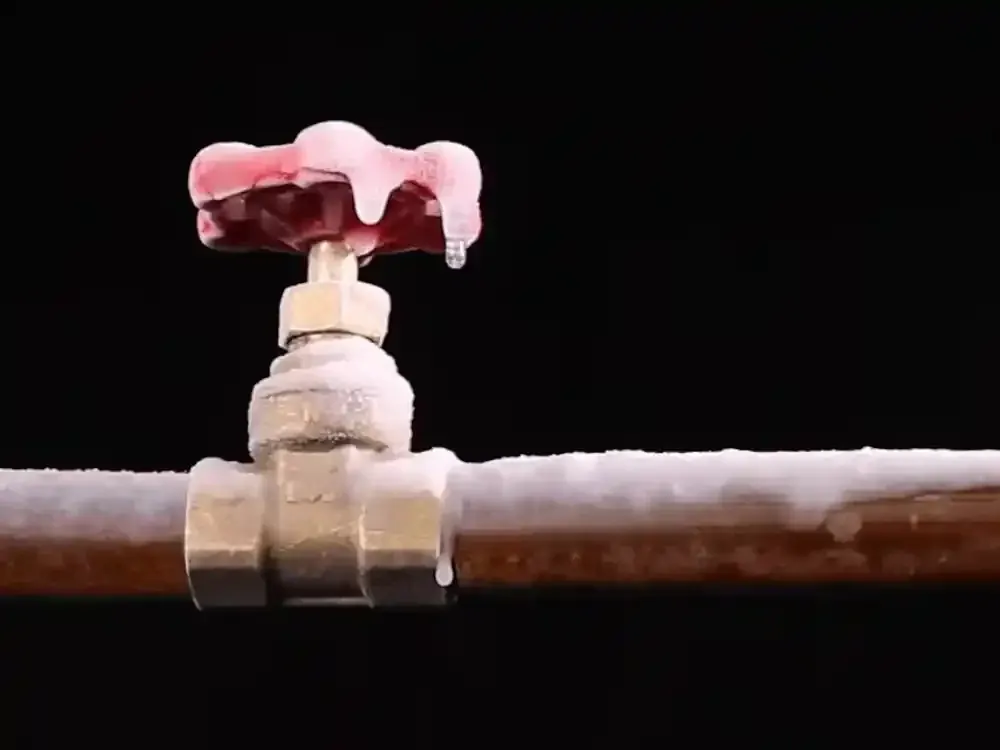
If one faucet gives no water on a freezing day, open it and look for the frozen section. Warm it slowly with a hair dryer, moving toward the faucet. If you see a crack or a wet spot, close the main water valve first and call a plumber. Never use an open flame.
Thawing safely
Open the faucet fully so melting water and steam can leave.
Find the frozen section, usually along an exterior wall, in a crawlspace or near a basement window.
Warm the pipe with a hair dryer, heating pad or warm towels, starting near the faucet and working back.
Watch the pipe as it thaws for any crack or drip.
Check other faucets, since one frozen pipe often means others are close.
If you cannot reach the frozen part or suspect it is split, close the main and call. Our burst pipe repair line is open 24/7.
What never to do
Never use a torch, a propane heater or any open flame on a pipe.
Do not leave a space heater running unattended near a pipe.
Do not ignore a pipe that has stopped, because a thaw can reveal a split.
Do not run electricity through the wet area if water has leaked.
Do not pour boiling water on a plastic or very cold pipe.
A flame can ignite framing and melt solder joints, and it is a common cause of house fires during a freeze.
Where pipes freeze and why
Pipes freeze where cold air reaches them: exterior walls, crawlspaces, unheated garages, attic runs and pipes near a vent or a window. A pipe that has frozen once is likely to freeze again unless something changes.
A frozen pipe often splits at a joint or along its length, but the water does not show until it thaws. That is why a quiet house at night can have a flood by morning. If water starts to run when the pipe warms, shut off the main at once.
Preventing a repeat
Insulate pipes in cold spaces with foam sleeves, and seal drafts around the penetrations where lines enter the house. On a night with a hard freeze, open cabinet doors on exterior walls and let a faucet drip. If you will be away, keep the heat on at a modest setting.
Shut off and drain outdoor hose bibs before winter and disconnect hoses. A hose left on a spigot holds water that freezes and splits the pipe inside the wall. See faucet repair for hose bib repair after a freeze.
Where to look for a frozen pipe
| Location | Why it freezes | What to check |
|---|---|---|
| Exterior wall behind a sink | Cold air reaches the pipe with little insulation | Open the cabinet and feel the pipe |
| Crawlspace or unheated basement | Cold air from vents or gaps | Look for frost and cold spots near the vents |
| Garage supply or washer line | No heat in the space | Check the line where it enters |
| Outdoor hose bib | Water left in the pipe and the spigot | Check the faucet inside the wall |
| Attic supply or sprinkler line | Exposed to the coldest air | Check insulation and heat tape |
A pipe that is cold to the touch and has no flow is the likely culprit. Start with the pipe closest to the dry tap.
Prevention checklist before a freeze
Disconnect hoses and close the interior valve to outdoor faucets.
Insulate pipes in crawlspaces, garages and exterior walls.
Seal gaps around pipes where they pass through walls or sills.
Know where your main water shutoff is and test that it turns.
Keep the heat on and open cabinet doors on a hard freeze night.
An hour of preparation in autumn is cheaper than a repair in January.
After the thaw: check for damage
When a frozen pipe thaws, watch it closely for the first hour. A split can start dripping or spraying once the ice melts. Check the ceilings and walls below the pipe for stains, and look at the floor for damp spots.
If you find a leak, close the main valve and call. Dry the area quickly and take photos for your insurer. A frozen pipe often leaves a weak spot even when it does not split, so a plumber's check is worth it, and leak detection can find a hidden problem in a wall.
How to thaw a pipe safely
Open the faucet first so melting water and steam have somewhere to go. Then warm the pipe slowly, starting near the tap and working back toward the frozen section.
A hair dryer, a heating pad or warm towels work well. Never use an open flame, a torch or a heater aimed at a wall, because they can set framing on fire or overheat the pipe and split it.
If you cannot find the frozen spot, it is behind a wall or you see water or bulging, shut off the main and call. A pipe that is frozen in a place you cannot reach is exactly when a plumber's tools save the wall.
Water shutoffs, the curb stop and who to call
The Massachusetts consumer fact sheet says plumbing work is done by a licensed plumber and that a local inspector issues a permit before plumbing is installed, altered, replaced or repaired, though minor repairs are not covered by that. Replacing a split section of pipe is piping work, so ask the Bridgewater Building Department how it applies.
If your main shutoff will not close, the town's Water Department controls the curb stop. The town's website lists its contact information, and we help you with the inside valve and the repair.
Source type: state consumer fact sheet and municipal websiteWhere we work
We repair frozen and split pipes in Bridgewater and in Middleborough and Halifax. Tell us where the pipe is and what you can see.
Sources and standards for this guide
According to the American Red Cross, keeping the heat on and opening cabinet doors helps prevent frozen pipes. Pipe repairs follow 248 CMR 10.00.
Questions readers ask
It depends on the pipe and the heat. A hair dryer can take half an hour or more. Do not rush it with a flame.
Yes. Ice expands and can split the pipe. The water shows up when it thaws.
On a hard freeze, a small drip can keep water moving and reduce the chance of freezing.
Close the main if you see any wet spot and call us. We can find it.
Many policies cover sudden damage from a burst pipe. Read yours and keep records.
Still have a question? Call (508) 389-4045 and we will answer it.