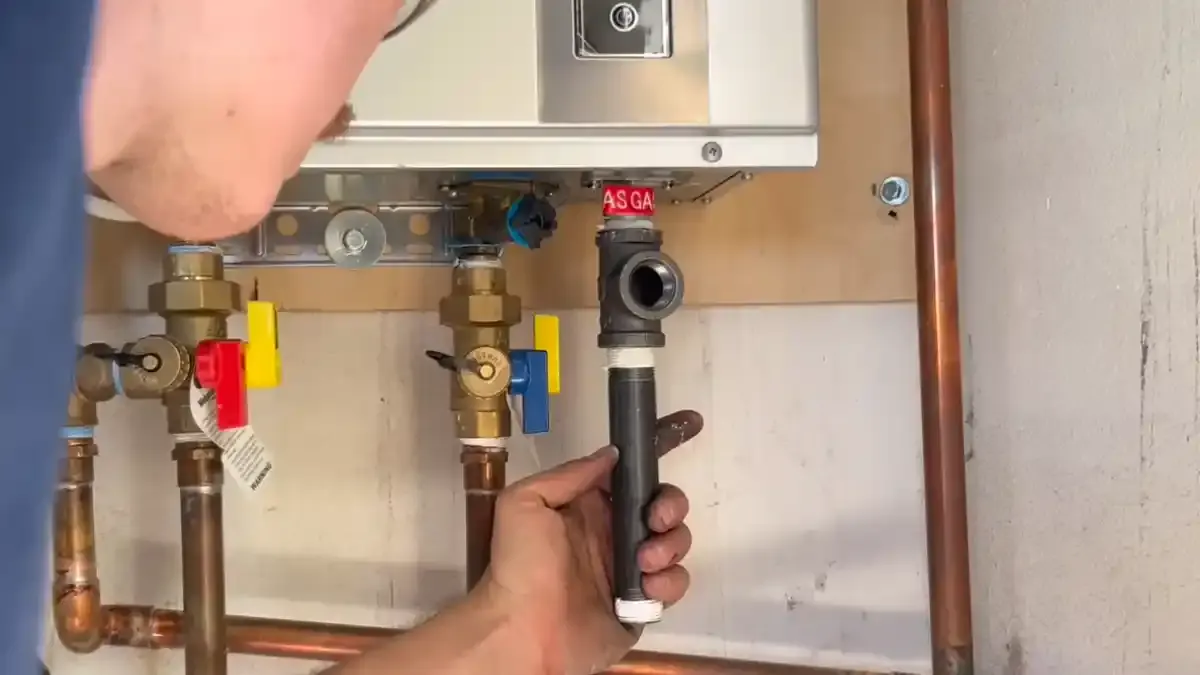
The short answer
The vent has to match the water heater. An atmospheric unit rises through a metal flue by natural draft. A power vent uses a fan and plastic or metal pipe through a wall. A direct vent pulls air in and sends exhaust out through a sealed pair of pipes. The manufacturer's instructions decide which pipe, how long and how many turns.
Common vent types
| Type | How it works | Watch for |
|---|---|---|
| Atmospheric (natural draft) | Hot exhaust rises through a metal flue | Backdrafting if the house is tight or the flue is blocked |
| Power vent | A fan pushes exhaust through a pipe, often to a side wall | Needs power and a safe termination point |
| Direct vent | Sealed intake and exhaust pipes through a wall | Length and elbow limits from the maker |
| Condensing | Extracts more heat so exhaust is cooler | Needs corrosion-resistant vent and a drain for condensate |
A new unit may need a different vent from the old one, so do not assume the old flue can be reused.
Vent points that cause trouble
A flue that is too small, too long or has too many bends.
A horizontal run without the slope the maker requires.
Loose or unsealed joints that leak exhaust into the room.
A termination near a window, door or air intake.
Not enough combustion air in a closed utility room.
These are the points an inspector checks and a plumber should too. If you smell exhaust or see soot, shut the heater off and call.
Why a replacement often needs new venting
Newer high-efficiency units extract more heat, so the exhaust is cooler and can condense inside an old metal flue. That causes corrosion and leaks. A stainless liner or a new plastic vent is often needed. See our page on water heater replacement for how we plan the swap.
Modern homes are also tighter than old ones, so combustion air matters more. A water heater in a closed closet needs air from somewhere, and the plan has to say where.
What a vent check looks like
We identify the unit type and read the manufacturer's vent table.
We measure the run, the rise and the number of turns.
We check slope, supports and sealed joints.
We check the termination clearances to windows and doors.
We test for draft or fan operation and for a safe flame.
Signs your water heater vent is not working
Soot or scorch marks around the draft hood or the vent connector.
A burner flame that flickers, leans or turns yellow.
A smell of exhaust, or a carbon monoxide alarm that sounds.
Condensation or rust streaks on the flue pipe or the wall near it.
A pilot that keeps going out in the same weather conditions.
Any of these deserves a prompt look. If a carbon monoxide alarm sounds, everyone leaves the house and calls 911 from outside.
Combustion air and tight houses
A gas water heater burns air as well as gas. In an older, leaky house, enough air finds its way to the burner. In a tight, well-sealed house, a heater in a closed closet can starve for air and spill exhaust into the room.
Combustion air can come from louvered openings to a larger space, ducts to the outside or a sealed direct vent system that brings its own air. We look at the room, the volume and any exhaust fans or dryers that compete for air. A kitchen hood or a dryer running at the same time can pull exhaust back down a weak flue.
Questions we ask before choosing a vent
| Question | Why it matters |
|---|---|
| What fuel and what burner type? | Atmospheric and power vent units need different pipe |
| Where can the vent exit? | The termination needs clearances from doors and windows |
| How long is the route? | Length and elbows are limited by the maker |
| Is there combustion air? | A closed closet may need louvers or ducts |
| Is the old flue sound? | A corroded flue cannot be reused with a new unit |
The answers decide whether a swap is simple or becomes a venting project, which is why we ask them before we quote.
Why permits and inspections apply
A venting change on a gas appliance is not a casual swap. In Massachusetts the work is done by a licensed plumber or gas fitter, and the local inspector issues the permit and checks the finished job.
In Bridgewater the Building Department handles plumbing permits and inspections, and a permit card is posted before work starts. The inspection confirms that the vent, the gas connection and the combustion air meet the code.
That paperwork protects you. A properly permitted install is documented, which matters when you sell the house or file an insurance claim, and it means a second set of eyes checked the part that can hurt people.
Codes and permits that cover venting
Massachusetts plumbing and gas fitting work is covered by the state's regulations at 248 CMR, and West Bridgewater's building department page lists 248 CMR 4.00, the gas code, 248 CMR 5.00, its amendments to NFPA 54, and 248 CMR 10, the Uniform Plumbing Code. Bridgewater's own Building Department says plumbing and gas work tied to a project needs a separate permit and that a permit card must be in hand before work begins.
For a vent change, ask the Bridgewater Building Department what it requires and let a licensed plumber pull the permit.
Source type: state regulations and a municipal building department pageWhere we install
We install and vent water heaters in Bridgewater and in nearby West Bridgewater and Halifax. Tell us the unit, the fuel and the vent route you have now.
Sources and standards for this guide
Gas venting follows the Massachusetts fuel gas code, 248 CMR 5.00, and the maker's manual. According to the Consumer Product Safety Commission, carbon monoxide alarms are a standard safeguard.
Questions readers ask
Sometimes. A high-efficiency unit may need a liner or a new vent. We check before we install.
It is when exhaust spills into the room instead of going up the flue. It is a safety hazard and needs prompt attention.
Permit rules vary by job. Ask the Building Department. A licensed plumber handles the permit step.
The manufacturer and the gas code set it. We check the termination against both.
A working CO alarm near sleeping areas is a basic safety step. Check the rules for your house with the Fire Department.
Still have a question? Call (508) 389-4045 and we will answer it.