A mill village on the Town River
Stanley takes its name from the Stanley Works, which bought the Bridgewater Iron Works site on High Street in 1899. Iron had been worked on the Town River there since the late 1600s. The works moved production to New Britain, Connecticut, in 1928.
Most of the site is now Iron Works Park, a 12-acre town park listed on the National Register of Historic Places in 2002. Part of the property houses the town's Highway Department. The houses nearby grew up around the mill, and that shapes the plumbing questions we hear.
Worker housing and what the state survey says
The Massachusetts Historical Commission survey of Bridgewater describes double cottages in Stanley, built as workers' housing, and modest sidehall cottages and frame houses added later in the 1800s. It also records early Irish settlement here by the 1850s.
Double cottages are two homes under one roof. If you live in one, find out which side your water line, shutoff and drain serve before an emergency, because a leak next door can look like your own.
If you live in a two-family house near High Street
Locate your main water shutoff and turn it once to make sure it moves.
Ask your neighbor or landlord where their shutoff is.
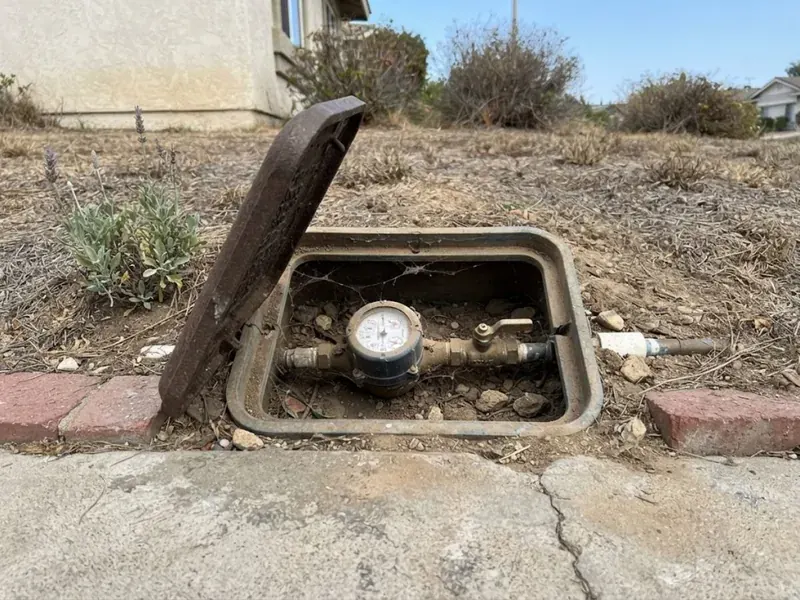
Check whether the water meter serves one unit or both.
Look for a cleanout on the main drain and note where it is.
Keep the numbers for the building owner and the town Water and Sewer office handy.
Having these answers makes a repair call shorter and a shutoff faster.
Water, drains and the High Street area
The town's 2002 master plan names public well fields at Carver's Pond and on High Street, both within aquifer protection districts. The state's source water assessment for the Bridgewater Water Department lists nine gravel-packed wells and iron treatment, so discoloured water is worth a call to the department before you suspect your own pipes.
For drains, the same plan said on-site septic systems served most homes in town, with municipal sewer limited to certain areas. Ask the Water and Sewer office at 151 High Street whether your address is on sewer before you plan any line work. For the town center, see our Central Square page.
Water heaters and iron-treated town water
According to the state's source water assessment, the town treats iron at its wells. Iron and mineral grit that reach a house can settle as sediment at the bottom of a tank water heater, which is general plumbing information and not a finding about any one street.
Draining a few gallons from the tank each year, as the maker's manual describes, clears some of it, and our water heater repair page explains what else to check. Ask the Water Department for its annual water quality report if you are choosing a softener or a filter.
Common calls and the first thing we check
| Call | First check |
|---|---|
| Slow kitchen or bath drain | Whether other fixtures are slow too |
| Wet spot on a ceiling | What sits directly above and when it appears |
| Water heater not heating | Fuel type, age and whether the breaker or pilot is on |
| Meter moving with taps closed | Toilets and outdoor hose bibs, then the line itself |
| Brown water | Whether the town has posted a notice, and hot versus cold |
These are the usual starting points anywhere. They are not a claim about how often any of them happens in Stanley.
Stanley plumbing questions
It is the village on the Town River around the old Iron Works on High Street. The town has no official boundary for it, so we use High Street and the Iron Works Park area as the anchor.
Yes. Tell us how many units there are and who owns the water line and the shutoffs.
It varies by street. The town's Water and Sewer office can tell you whether your address is connected.
The town's water page says iron discolouration is usually harmless and clears after running the cold tap. If it does not clear, call the department, then call us if you suspect your own pipes.
Still have a question? Call (508) 389-4045 and we will answer it.