When repiping beats another patch
Repiping in Bridgewater, MA replaces the supply lines inside a house when patching no longer keeps up. A house with a few leaks in old pipe, brown water at the tap or pressure that has dropped over the years is a candidate. The repair is planned work, so you can compare options and schedule it.
If a pipe is spraying water now, that is an urgent repair first. Our burst pipe repair page covers it. Repiping is what you discuss once the water is off and you are tired of the pattern.
Signs your pipes are wearing out
Pinhole leaks that show up in different places over time.
Brown or orange water, especially after the line has sat unused.
Reduced pressure at several fixtures, not just one.
Green corrosion or crusty buildup at joints and fittings.
A known problem pipe material, such as galvanized steel or polybutylene.
One of these does not mean you need a repipe. A pattern of them does. We look at the pipes and tell you what is failing.
Copper or PEX
| Material | Strengths | Trade-offs |
|---|---|---|
| Copper | Long track record, tolerates heat, fire resistant | Higher material cost and more labor, and aggressive water can corrode it |
| PEX | Flexible, quick to run through walls, resists freezing damage better | Not for outdoor sun exposure, and fittings must be done right |
| CPVC | Inexpensive and rigid | Can become brittle with age and is less common now |
Both copper and PEX are used in Massachusetts homes, and the plumbing code allows several materials. We recommend the one that suits your house and explain why.
What a repipe actually involves
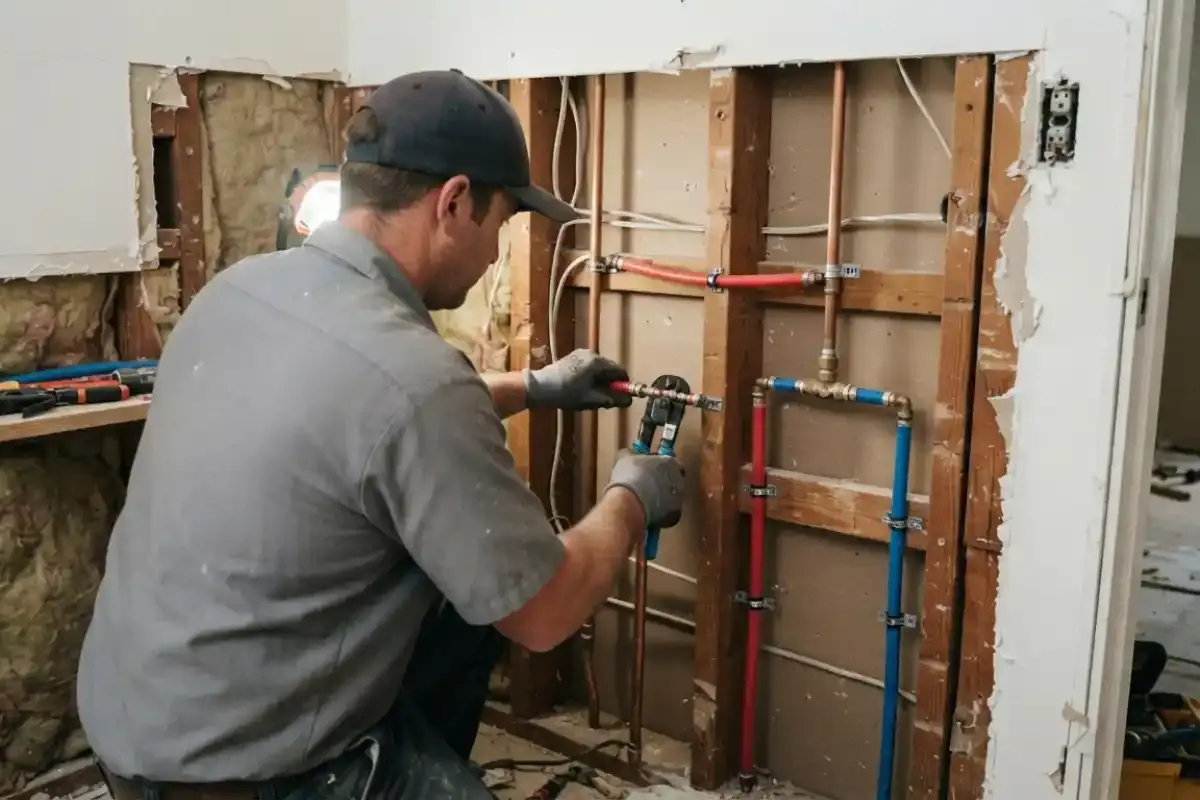
A whole-house repipe replaces the supply lines from the main valve to every fixture. The crew opens small access holes in walls and ceilings, runs new lines and connects the fixtures. A partial repipe replaces one section, such as a bathroom group or a single run in a basement.
We plan the work in stages so you can use water at the end of each day when possible. Patching holes is a separate step, and we tell you what we leave for a drywall contractor. A new main valve and pressure check are part of the job.
Pipes inside the house versus the service line
Repiping covers the pipes inside your house. The service line from the street to your meter or main valve is a different system. If that line is old, replacing it at the same time can make sense. Our water line repair page explains the line, and the town lists a lead service line program that is worth asking about.
Ask the Bridgewater Water Department about your line. We check the material at the main valve and tell you what we see. A galvanized or lead service line is worth replacing when you are already opening walls.
What to do before the crew arrives
Clear access to the water heater, the main shutoff and any wall or closet the crew must open.
Move valuables and cover furniture near the work areas.
Plan for the water to be off for part of the day and fill a few containers.
Keep children and pets away from open walls, tools and cut pipe.
Tell us about any older insulation or wrapping on pipes, which should be left alone until it is identified.
Safety comes first on a repipe. We tell you what we find as the walls open and what it means for the plan.
What changes the price
| Factor | Why it matters |
|---|---|
| House size and floors | More fixtures and runs mean more pipe and labor |
| Pipe material | Copper costs more than PEX |
| Access | Finished walls and ceilings need more patching |
| Scope | Whole house or a single section |
| Permit | A licensed plumber pulls the permit and calls the inspection |
Insurance does not pay for a planned repipe, though it may cover damage from a leak that caused it. Want your real number? Call (508) 389-4045.
Code and sources for this work
New supply piping must be listed for potable water and installed to 248 CMR 10.00. According to the EPA, the federal Safe Drinking Water Act sets a standard of 0.25 percent lead in wetted plumbing surfaces, which is why modern repipes use lead-free fittings.
Repiping questions
A pattern of leaks, brown water or low pressure points to it. A single leak does not. We look at the pipes and give you an honest answer.
It varies with the house size and access. We give you a schedule when we price the job.
Both are used widely. PEX is flexible and quick to install. Copper has a longer track record. We help you choose.
Often small access holes are needed. We keep them as few and as small as we can and tell you what finishing is left.
A burst pipe is handled as an emergency repair. See burst pipe repair. A full repipe is planned work.
Still have a question? Call (508) 389-4045 and we will answer it.